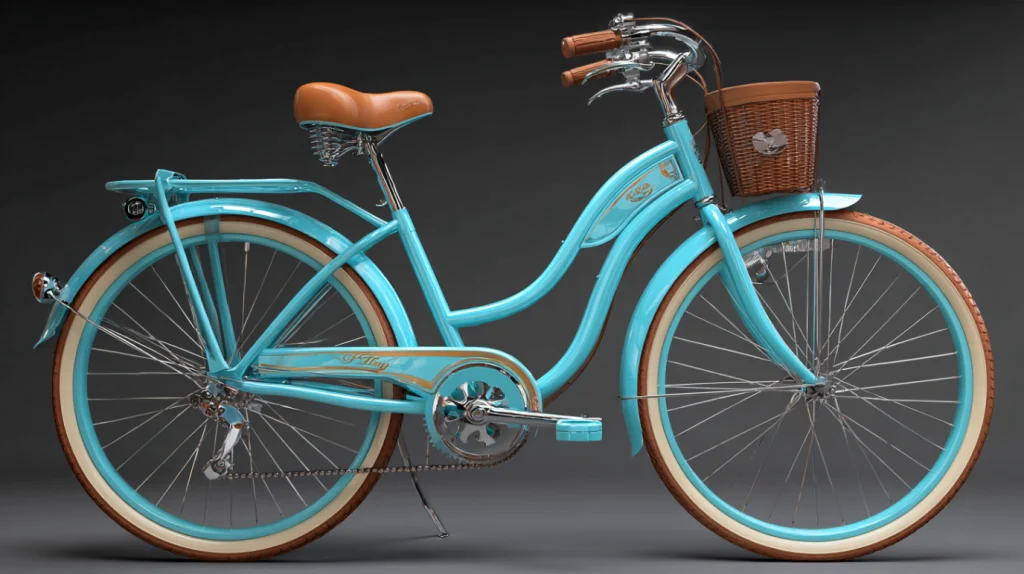
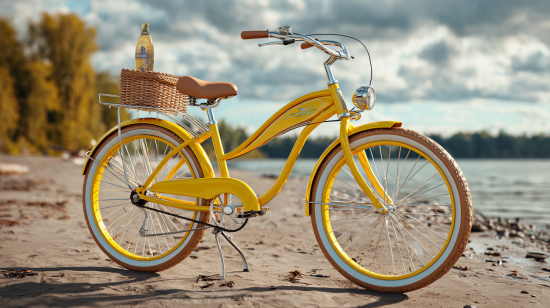


26″ Huffy Nel Lusso Women’s Cruiser Bike, Butter Yellow
- Double Comfort: Double comfort, two-tone grips and pedals ensure complete control while riding.
- Safety Features: Easy-to-use coaster brakes and a rear reflector help keep the rider safe in traffic.
- All-Weather Performance: Alloy wheels resist corrosion and enhance performance in wet conditions.
- Retro Design: Features a fun retro design with chrome handlebars, seat springs, and a pale yellow finish.
- Convenient Storage: Includes a rear rack, handlebar basket, and front beverage holder for ample storage.
- Comfortable Ride: Padded spring bike saddle seat with embroidery and quick-release seat binder for easy adjustments.
- Durable Build: Steel cruiser frame with classic fenders and 26″ x 2.35″ creme cruiser tires for a smooth ride.
- Assembly Included: Assembly instructions included, with complimentary assembly possibly available at local stores.
$128.00

Huffy 26″ Nel Lusso Women’s Cruiser Bike with Perfect Fit Frame, Yellow.
- Comfort Design: Perfect Fit frame’s design delivers more comfort, more confidence, and a better ride.
- Convenient Accessories: Includes a rear storage rack, smartphone holder, beverage cupholder, and front basket.
- Ergonomic Handlebar: Cruiser handlebar with dual-density grips and a swept-back position for better posture.
- Protective Fenders: Fenders redirect splashes to keep you dry while riding.
- Adjustable Saddle: Padded saddle placed at a lower center of gravity for a confident riding position; quick-release binder clip for easy seat height adjustment.
- Easy Braking: Features an easy-to-use coaster brake; simply pedal back to stop.
- Durable Tires: Equipped with 26″ cruiser tires and brown steel rims that complement the classic design.
- Stylish and Functional: Yellow cruiser bike with a durable steel frame and clear assembly instructions included.
$218.00

Huffy 26″ Woodhaven Cruiser Bike, Fits Riders 60″+, Cream Yellow, Adult, Women’s
- Stylish Finish: The playful cream yellow frame adds timeless appeal to a relaxed cruising experience.
- Comfortable Saddle: Wide, dual-density padded saddle with embroidered Huffy logo ensures every ride feels smooth.
- Simple Riding: Single-speed drivetrain and coaster brakes make riding intuitive and low maintenance.
- Durable Frame: Steel cantilever cruiser frame with 26-inch wheels for a smooth, stable ride on paved paths.
- Practical Storage: Integrated rear rack and front basket provide practical storage for errands or leisurely rides.
- Stable Wheels: 26-inch wheels and wide cruiser tires add stability on sidewalks and park trails.
$249.99
Why a Yellow Cruiser Might Just Be the Most Joyful Two-Wheeled Decision You’ll Ever Make
I’ll never forget the moment I fell in love with yellow cruiser bikes. It was a Saturday morning at Venice Beach, and there she was—this absolutely stunning sunshine-yellow cruiser parked outside a coffee shop, gleaming in the California sun like it had been dipped in liquid gold. The bike had this vintage vibe that screamed carefree summer days, and I knew right then that I needed one in my life. That moment started my deep dive into everything there is to know about buying a yellow cruiser bike, and let me tell you, it’s been quite the journey.
Now, two years and countless miles later, I’m here to share everything I’ve learned about these cheerful two-wheeled companions. Whether you’re dreaming of beach rides, casual neighborhood cruising, or just want something that makes you smile every time you unlock it from the bike rack, this guide has got you covered.
Where Can I Buy a Yellow Cruiser Bike?
When I first started my search, I thought finding the perfect yellow cruiser bike would be like searching for a needle in a haystack. Turns out, I was pleasantly surprised by just how many options are out there.
Local bike shops were my first stop, and honestly, they should be yours too. There’s something magical about actually sitting on a bike before you buy it. I visited about five different shops in my area, and each one had at least one or two yellow cruisers in stock. The shop owners were incredibly helpful, adjusting seat heights and letting me take test rides around the block. Plus, many of these shops offer free tune-ups for the first year, which saved me a bundle down the road.
Big-box sporting goods stores like Dick’s Sporting Goods and REI also carry cruiser bikes, including yellow options. I found their selection a bit more limited than specialty shops, but the prices were often competitive, especially during seasonal sales. I remember seeing a gorgeous yellow beach cruiser at Dick’s for about thirty percent off during their Memorial Day sale.
Online retailers opened up a whole new world for me. Amazon has an impressive selection of yellow cruisers, and I spent hours reading reviews and comparing specifications. Walmart’s website surprised me with some budget-friendly options that had surprisingly good ratings. Then there are specialized cycling websites like Jenson USA and Performance Bicycle, where I found some real gems.
Don’t overlook direct-to-consumer brands either. Companies like Sixthreezero and Huffy sell directly through their websites, cutting out the middleman and often offering better prices. I ordered swatches from a couple of these companies to see the exact shade of yellow before committing, which was a game-changer because “yellow” can mean anything from pale lemon to electric sunshine.
Facebook Marketplace and Craigslist became my guilty pleasure. I’d browse listings every morning with my coffee, and you can find some incredible deals on gently used yellow cruisers. I almost bought a vintage Schwinn for half the retail price, but someone beat me to it by fifteen minutes. The hunt was thrilling, though.
How Much Does a Yellow Cruiser Bike Cost?
Let’s talk money, because this was one of my biggest concerns when I started shopping. The price range for a yellow cruiser bike is surprisingly wide, and understanding what you’re paying for made all the difference in my decision-making process.
Entry-level yellow cruisers typically run between 150 and 300 dollars. These are your basic bikes with simple single-speed designs, coaster brakes, and steel frames. I test-rode a Huffy Nel Lusso in this price range, and while it wasn’t fancy, it was solid and reliable. Perfect for someone who wants to dip their toes into cruiser bike ownership without breaking the bank.
Mid-range options fall between 300 and 600 dollars, and this is where I eventually landed. These bikes often feature better components—think aluminum frames instead of steel, more comfortable saddles, and smoother-rolling tires. I ended up with a Sixthreezero EVRYjourney in the most beautiful buttercup yellow, and it cost me about 450 dollars. The upgrade in quality was immediately noticeable.
Premium yellow cruisers can run anywhere from 600 to over 1,500 dollars. We’re talking brands like Electra and specialized manufacturers who use high-end components, multiple gears, and sometimes even hand-painted frames. I test-rode an Electra Cruiser Lux that cost around 800 dollars, and wow, it felt like riding on a cloud. The craftsmanship was impeccable.
Electric yellow cruiser bikes are in a league of their own, typically starting around 1,200 dollars and going up to 3,000 dollars or more. I seriously considered getting one when I saw how effortlessly they handled hills, but ultimately decided to stick with traditional pedal power for my fitness goals.
What I learned is that you generally get what you pay for, but that doesn’t mean the most expensive option is always the best choice for your needs. I recommend setting a budget based on how often you’ll ride and what features matter most to you.
What Are the Best Yellow Cruiser bike Models?
After months of research and test rides, I’ve developed some strong opinions about the best yellow cruiser bike models on the market. Here are the ones that really stood out to me.
The Sixthreezero EVRYjourney became my top choice for good reason. This bike comes in several shades of yellow, and the design is just gorgeous. What sets it apart is the slightly forward pedaling position, which I found incredibly comfortable for longer rides. The ergonomic setup meant I could ride for an hour without any back pain, which was a huge deal for me.
The Schwinn Perla caught my attention with its vintage-inspired design. Available in a soft yellow that reminded me of buttercream frosting, this bike has a classic swept-back handlebar and a sprung saddle that looks straight out of the 1950s. I took one for a test ride, and the nostalgia factor was off the charts. It’s a single-speed with a coaster brake, keeping things beautifully simple.
For something more budget-friendly, the Huffy Nel Lusso delivers solid performance without emptying your wallet. The yellow option is bright and cheerful, and while it doesn’t have all the bells and whistles of pricier models, it’s reliable for casual neighborhood rides. My neighbor has one, and she’s been riding it almost daily for two years without any major issues.
The Electra Cruiser Lux represents the premium end of the spectrum. When I test-rode the yellow version, I immediately understood why people are willing to pay more. Everything about it felt refined—from the plush saddle to the smooth-as-butter gear shifting. If budget isn’t a concern, this is the bike that’ll make every ride feel special.
For those interested in electric options, the Electra Townie Go! in yellow is absolutely stunning. I borrowed my friend’s for a weekend, and the pedal-assist feature transformed my relationship with hills. Suddenly, the steep climb to the neighborhood park became fun instead of exhausting.
Are Yellow Cruiser Bikes Available for Men and Women?
This question used to confuse me more than it should have. The truth is, most yellow cruiser bikes are designed with a “women’s” or “step-through” frame, but here’s what I’ve learned: anyone can ride any bike that fits them comfortably.
The traditional “women’s” frame has a low or absent top tube, making it super easy to mount and dismount. This design actually originated because of long skirts, not because of any anatomical difference. I’m five-foot-six, and I absolutely love the step-through design because I can wear whatever I want without worrying about swinging my leg over a high bar.
That said, men’s cruiser bikes with yellow paint jobs definitely exist. They typically feature a horizontal top tube and a slightly different geometry. I’ve seen plenty of men riding step-through cruisers too, especially older riders who appreciate the ease of getting on and off. My dad, who’s in his seventies, actually prefers the step-through design because it’s gentler on his hips.
What matters more than the “gender” designation is finding a bike that fits your body. Frame size, handlebar height, and saddle position make a much bigger difference than whether the bike is marketed toward men or women. When I was shopping, I tested both frame styles and found the step-through worked better for my riding style, regardless of how it was labeled.
Many brands now use more inclusive language like “low-step” or “high-step” instead of gendered terms, which I think makes way more sense. Focus on the specifications and how the bike feels when you ride it, not the marketing labels.
Is a Yellow Cruiser Bike Good for Casual Riding?
Oh my goodness, yes! This is where yellow cruiser bikes absolutely shine, and it’s precisely why I chose one over other bike styles. Let me paint you a picture of what casual riding on a cruiser feels like.
Cruiser bikes are designed with comfort as the absolute priority. The upright riding position means you’re sitting like you would in a comfortable chair, not hunched over like you’re in a race. My first ride on my yellow cruiser felt like floating—no hand numbness, no sore back, just pure enjoyment. I could actually look around at my surroundings instead of staring at the pavement two feet in front of me.
The wide, cushioned saddles on cruisers are a game-changer for casual rides. I can comfortably ride to the farmer’s market, browse for an hour, then ride home without any discomfort. Compare that to my road bike, where I couldn’t sit for more than thirty minutes without needing a break.
Balloon tires (those wide, cushy tires you see on cruisers) absorb bumps and cracks in the road like a dream. I live in an area with pretty rough sidewalks, and my cruiser just glides over imperfections that would rattle my teeth on a thinner-tired bike. This makes casual neighborhood exploration so much more pleasant.
The slower pace of a cruiser bike is actually a feature, not a bug, for casual riding. I’m not trying to set speed records or train for a race—I’m trying to enjoy the journey. My yellow cruiser keeps me at a relaxed 8-12 miles per hour, which is perfect for waving to neighbors, stopping to pet dogs, and actually experiencing my surroundings.
For running errands, meeting friends for coffee, or just taking a sunset ride along the waterfront, I honestly can’t imagine a better bike. The casual, laid-back vibe of a cruiser matches the activity perfectly.
Does a Yellow Cruiser Bike Come With a Basket?
This was one of my first questions too, and the answer is: sometimes, but not always. About half the yellow cruiser bikes I looked at came with baskets included, while others offered them as optional accessories.
My Sixthreezero came with a rear rack but no basket, which initially disappointed me. Then I realized this was actually an opportunity to choose exactly the basket I wanted. I ended up getting a large woven basket for the front that holds my beach towel, sunscreen, and a good book. It’s become as much a part of the bike’s personality as the yellow paint.
Front baskets are the classic cruiser accessory. They’re perfect for carrying your purse, a small grocery bag, or your adorable dog (if they’re into that sort of thing). I’ve seen people carry everything from flowers to cameras in their front baskets. The romantic in me loves seeing a yellow bike with a basket full of fresh flowers from the farmer’s market.
Rear baskets or racks offer more carrying capacity without affecting your steering. I added a rear basket to mine specifically for bigger grocery trips. Pro tip: make sure any basket you add is properly secured and doesn’t interfere with your pedaling or the bike’s balance.
Some bikes come with both front and rear baskets, which is fantastic if you do a lot of errand-running by bike. My friend has a setup like this on her yellow cruiser, and she barely uses her car anymore for quick trips around the neighborhood.
When shopping, I learned to ask specifically about basket compatibility. Some bikes have built-in mounting points that make adding baskets super easy, while others require special adapters. Check the weight limit too—most front baskets can handle 10-15 pounds, while rear racks often support 30-40 pounds.
What Is the Frame Material of a Yellow Cruiser Bike?
Understanding frame materials was crucial in my bike-buying journey, and it’s more interesting than it might sound. The material affects everything from weight to durability to price.
Steel frames are the traditional choice for cruiser bikes, and there’s a reason they’ve been around forever. My first cruiser had a steel frame, and it was practically indestructible. Steel absorbs road vibrations beautifully, creating a smooth, comfortable ride. The downside? Weight. Steel frames can be heavy—my old bike weighed around 45 pounds, which made carrying it up stairs a real workout.
The durability of steel is legendary, though. I’ve seen vintage steel cruisers from the 1960s still rolling strong today. If you’re looking for a bike that’ll last decades and don’t mind the extra weight, steel is fantastic. Plus, steel frames are generally the most affordable option.
Aluminum frames are what I ultimately chose, and I’m so glad I did. My current yellow cruiser with an aluminum frame weighs about 35 pounds—ten pounds lighter than my old steel bike. This might not sound like much, but trust me, you feel it when you’re lifting your bike onto a car rack or pedaling up even a gentle incline.
Aluminum frames are also rust-resistant, which is huge if you live near the ocean like I do. Salt air and steel are not friends, but aluminum handles it like a champ. My bike sits on my porch year-round and still looks pristine. The ride quality is slightly different from steel—a bit stiffer—but modern aluminum cruisers use design tricks to maintain comfort.
Chromoly steel (a chrome-molybdenum alloy) is the premium option in steel frames. It’s lighter and stronger than regular steel while maintaining that smooth ride quality. I test-rode a chromoly cruiser, and it was noticeably lighter than standard steel while still having that classic cruiser feel. These tend to be pricier, though.
Some high-end cruisers even use carbon fiber, but I didn’t find any yellow options in this category. Carbon is incredibly light but also incredibly expensive—probably overkill for a casual cruiser anyway.
Are Yellow Cruiser Bikes Good for Beach Rides?
As someone who lives three blocks from the beach, I can answer this with absolute certainty: yellow cruiser bikes are absolutely perfect for beach rides. In fact, I’d argue they were practically designed for this exact purpose.
The wide tires on cruisers are ideal for riding on boardwalks and packed sand paths. Those balloon tires I mentioned earlier? They provide stability and prevent you from sinking into softer surfaces. I regularly ride along the beach path, and my cruiser handles the occasional sandy patch without any drama.
However, I need to be honest about one thing: riding on actual loose beach sand is challenging on any bike that isn’t specifically a fat-tire beach cruiser. I learned this the hard way when I tried to ride across soft sand to get closer to the water. Regular cruiser tires (even wide ones) will sink and make pedaling nearly impossible. Stick to the hard-packed sand near the water’s edge or designated bike paths.
The rust-resistant features of many modern yellow cruisers make them excellent beach companions. Salt air is brutal on bikes, which is why I specifically chose an aluminum frame and stainless steel components. After two years of coastal riding, my bike shows minimal corrosion. I do rinse it with fresh water after particularly salty or sandy rides, which helps tremendously.
The comfortable, upright position of a cruiser is perfect for taking in ocean views. I love that I can ride along the coast and actually see the sunset, the surfers, and the seagulls without craning my neck. It’s pure joy on two wheels.
Coaster brakes (the kind where you pedal backward to stop) can be a bit tricky on sandy paths because sand can get into the mechanism. I opted for a model with hand brakes, which I think work better in beach environments. Just something to consider if you’ll be doing a lot of coastal riding.
The vibe of a yellow cruiser also just fits beach culture perfectly. Every time I ride to the beach, I feel like I’m in an old surf movie. The bike photographs beautifully against the ocean, too—my Instagram has never looked better!
What Sizes Are Available for Yellow Cruiser Bikes?
Finding the right size was probably the most important part of my yellow cruiser bike buying process, yet it’s something many people overlook. Getting the size wrong can turn a potentially comfortable ride into an uncomfortable ordeal.
Most cruiser bikes come in three basic sizes: small (or 24-inch), medium (or 26-inch), and large (or 29-inch). These measurements refer to the wheel size, not the frame size like you might see on other bike types. It confused me at first, but once I understood it, everything clicked.
26-inch wheels are the standard size and fit most riders between 5’0″ and 6’0″. This is what I have, and at 5’6″, it’s absolutely perfect. The standover height is comfortable, and I can touch the ground with both feet when stopped, which gives me confidence at traffic lights.
24-inch wheels are designed for shorter riders, typically those under 5’4″. I helped my friend who’s 5’1″ find her yellow cruiser, and the 24-inch wheel size made all the difference. On a 26-inch bike, she felt stretched out and uncomfortable, but the smaller size fit her perfectly.
29-inch wheels (sometimes called 700c in more road-oriented cruisers) are for taller riders, generally those over 5’10”. My brother, who’s 6’2″, tried my 26-inch cruiser and looked like a circus bear on a tiny bicycle. He needed the larger frame to avoid knee pain and maintain proper riding posture.
Beyond wheel size, pay attention to frame geometry. Some cruisers have longer or shorter frames even with the same wheel size. When I was shopping, I found two different 26-inch yellow cruisers that fit me completely differently because of frame design.
Here’s my best advice: test ride before buying if at all possible. Sit on the bike with your feet flat on the ground—you should be able to straddle the frame comfortably with an inch or two of clearance. When seated on the saddle, you should be able to touch the ground with your toes. The handlebars should be easy to reach without stretching or hunching.
Many online retailers provide size charts based on height and inseam measurements. I measured my inseam (from floor to crotch while standing) and compared it to the manufacturer’s recommendations. This worked surprisingly well when I ordered accessories online.
How to Assemble a Yellow Cruiser Bike?
I’ll be honest—when my yellow cruiser bike arrived in a big box, I felt a moment of panic. Assembly seemed daunting, but it turned out to be much easier than I expected. Most cruisers come about 85% assembled, and you’re just finishing the job.
Here’s what I had to do, and what you’ll likely face too. The front wheel needs to be attached. This was the most intimidating part for me because I’d never done it before. The wheel came with the axle already in place—I just had to slide it into the front fork and tighten the nuts. I used a wrench (which was included) and made sure everything was snug. Pro tip: the wheel should spin freely without wobbling.
Handlebars needed to be positioned and tightened. They were already attached to the stem; I just had to align them straight and tighten the bolts. I used a trick someone on YouTube showed me: stand in front of the bike, put the front wheel between your knees, and turn the handlebars until they’re perpendicular to the wheel. Then tighten them down.
The saddle had to be inserted into the seat post and adjusted to the right height. This is crucial for comfort. I found my ideal height by sitting on the bike and making sure I could touch the ground with my toes while seated. The saddle should allow a slight bend in your knee when the pedal is at its lowest point. I must have adjusted mine five times in the first week before finding the sweet spot.
Pedals needed to be screwed on, and here’s where I made my first mistake. Pedals have opposite threads—the right pedal tightens clockwise, but the left pedal tightens counterclockwise. I spent twenty frustrating minutes trying to attach the left pedal the wrong way before I read the instructions properly. Learn from my mistake!
Basket installation (if not pre-installed) was straightforward. Mine came with brackets that attached to the handlebars. I just needed a screwdriver and about ten minutes.
The whole assembly process took me about 45 minutes, including time to watch a couple of YouTube videos for confirmation. I’m not particularly handy, and if I can do it, I promise you can too.
Tools you’ll need: Most bikes come with basic tools, but I found having a good set of Allen wrenches and an adjustable wrench made everything easier. A bike pump is essential too—the tires usually need air before your first ride.
My biggest piece of advice? Don’t rush. Take your time, follow the instructions, and double-check everything. After assembly, I took my bike to a local shop for a free safety check, which many shops offer. They tightened a few things I’d missed and gave me peace of mind.
If assembly really isn’t your thing, most bike shops will assemble a boxed bike for 50-75 dollars. It might be worth the investment for your confidence and safety.
What Are the Specifications of a Yellow Cruiser Bike?
Understanding specs helped me make an informed decision, even though I’m not a bike tech expert. Here’s what I learned about typical yellow cruiser bike specifications and what they actually mean for your riding experience.
Gearing is usually the first spec people ask about. Most classic cruisers are single-speed, meaning one gear for all conditions. My first cruiser was single-speed, and it was perfectly fine for flat terrain and casual riding. You pedal at a consistent pace regardless of conditions. Some cruisers offer three-speed or seven-speed options with internal hub gears or external derailleurs. I eventually upgraded to a three-speed, which made gentle hills much more manageable.
Braking systems come in two main varieties for cruisers. Coaster brakes (pedal backward to stop) are the traditional choice. They’re simple and nostalgic, but I found them less intuitive coming from a modern bike background. Hand brakes (like on modern bikes) give you more control, especially on hills or in wet conditions. My current yellow cruiser has both front and rear hand brakes, which I much prefer.
Frame geometry includes measurements like the top tube length, seat tube angle, and head tube angle. Honestly, these numbers meant nothing to me at first. What matters more is how the geometry translates to comfort. Cruisers typically have a relaxed geometry with a slack head tube angle (around 70 degrees) that creates stable, easy steering.
Wheelbase (the distance between the wheel axles) on cruisers is typically longer than on other bikes—around 42-45 inches. This longer wheelbase contributes to that stable, smooth ride but makes tight turning a bit more challenging. I learned to take wider turns, which actually feels more leisurely and fits the cruiser vibe.
Weight capacity is important if you plan to carry cargo or are a heavier rider. Most cruisers support 250-300 pounds, but check the specific model. My bike is rated for 300 pounds, which gives me plenty of room to carry groceries and other items.
Tire width on cruisers typically ranges from 2.0 to 2.4 inches—much wider than road bikes. My tires are 2.125 inches wide, which provides excellent cushioning and stability. Air pressure recommendations are usually between 40-65 PSI, lower than skinny road bike tires.
Crank length affects your pedaling efficiency. Most cruisers use 170mm cranks, which works well for the relaxed pedaling style. Shorter cranks (165mm) are better for shorter riders, while taller riders might prefer 175mm.
Does a Yellow Cruiser Bike Come With Gears?
The gear question was huge for me because I live in an area that’s mostly flat but has a few hills. Understanding whether a yellow cruiser bike needs gears depends entirely on where and how you’ll ride.
Traditional cruisers are single-speed, and there’s something beautifully simple about that. My first yellow cruiser had just one gear, and for riding around my flat neighborhood, it was absolutely perfect. No thinking required—just hop on and pedal. The simplicity also means less maintenance, which I appreciated as someone who’s not particularly mechanically inclined.
However, that single gear became a problem when I wanted to explore beyond my immediate neighborhood. I live near a beautiful park that’s on top of a gradual hill, and getting there on my single-speed cruiser turned into a serious workout. Coming back down was easy (maybe too easy—I had to brake the whole way), but going up meant standing on the pedals and struggling.
That’s when I discovered multi-speed cruisers, and it was a game-changer. My current yellow cruiser has three speeds with an internal hub gear system. It looks just as classic as a single-speed from the outside, but I can shift to an easier gear for hills and a harder gear for flat stretches where I want to go a bit faster.
Internal hub gears (like Shimano Nexus or SRAM i-Motion) are common on cruisers. They’re protected inside the rear hub, so they require minimal maintenance and work great even in wet, sandy conditions. I can shift while stopped at a red light, which is incredibly convenient. The downside is they’re heavier and more expensive than single-speed setups.
Some yellow cruisers come with seven-speed external derailleurs, similar to mountain bikes. These offer more gear range but require more maintenance and are more exposed to the elements. I considered one but decided the internal hub suited my needs better.
Electric yellow cruisers technically have “gears” in the form of pedal-assist levels. My friend’s electric cruiser has five levels of assistance, which she loves for longer rides or when she’s tired. It’s a different kind of gearing system but serves a similar purpose.
My advice? If you live in a flat area and only plan short recreational rides, single-speed is perfectly adequate and wonderfully simple. If you have any hills or want more versatility, invest in at least a three-speed. The extra cost is worth it for the expanded riding possibilities.
What Accessories Can I Add to a Yellow Cruiser Bike?
Accessorizing my yellow cruiser bike has been one of the most fun parts of ownership. I’ve probably spent almost as much on accessories as I did on the bike itself, but each addition made my riding experience better.
Baskets are the obvious first choice. Beyond the practical front basket I mentioned earlier, I also added a rear wire basket that’s perfect for carrying my yoga mat to classes. Some people go all out with wicker baskets that look like something from a European postcard. Just make sure they’re securely attached!
Bells are both functional and charming. I have a brass bell that makes the most delightful “ding-ding” sound when I need to alert pedestrians on shared paths. It’s so much nicer than yelling “on your left!” I’ve seen people with vintage-style bells, musical bells, and even bells that play little tunes.
Lights are essential for safety if you ever ride near dusk. I installed a vintage-style LED headlight that runs on AAA batteries and a red taillight for visibility from behind. They’re cute but also keep me safe. Some people go with battery-powered lights, while others prefer rechargeable USB options.
Fenders were a game-changer for me. I added cream-colored fenders to my yellow cruiser, and now I can ride shortly after it rains without getting a stripe of mud up my back. They also protect the bike’s components from spray and grime.
A comfortable saddle might be necessary if the stock seat doesn’t work for you. I upgraded to a sprung leather saddle after about six months, and my sit bones thanked me. Saddles are very personal, though—what works for me might not work for you.
Cup holders might seem excessive, but I love having a place for my water bottle or morning coffee during leisurely rides. I found a vintage-style brass one that attaches to my handlebars and holds my insulated tumbler perfectly.
Phone mounts help with navigation and fitness tracking. I use a waterproof case that attaches to my handlebars, so I can follow bike paths using Google Maps without constantly stopping to check my phone.
Locks are critical, unfortunately. I invested in a good U-lock and a cable lock for securing both wheels. My yellow bike is gorgeous and eye-catching, which also makes it a target for theft. A solid lock is the best accessory for peace of mind.
Streamers for the handlebars might seem childish, but who cares? I added yellow and white streamers that flutter in the breeze, and they make me smile every single ride. Cycling should be fun!
Are Yellow Cruiser Bikes Suitable for Long-Distance Rides?
This is where I have to be honest and realistic about yellow cruiser bikes. While I absolutely love my cruiser for many purposes, long-distance riding isn’t really their strong suit, and here’s why.
Cruiser bikes prioritize comfort over efficiency. That upright riding position I love for casual rides? It creates wind resistance that becomes exhausting over long distances. I once tried to do a 30-mile charity ride on my cruiser, and by mile 15, I was struggling against the wind like I was riding through molasses.
The weight of most cruisers works against you on longer rides. My aluminum-frame cruiser weighs 35 pounds, which is considerably heavier than a road bike or even a hybrid. Every extra pound requires more energy to propel forward, and over twenty or thirty miles, that adds up to significant fatigue.
Single-speed cruisers are particularly challenging for distance. Without gears to adjust your effort level, you’re stuck with one pedaling resistance regardless of terrain. Hills become brutal, and even flat stretches can feel monotonous with no ability to change gears and use different muscle groups.
That said, I have taken my three-speed yellow cruiser on rides up to about 15 miles, and it was perfectly enjoyable. I wasn’t trying to set any speed records—I was just exploring new neighborhoods and bike paths. The key is adjusting your expectations. If “long-distance” to you means a relaxed 10-15 mile scenic ride with plenty of stops, a cruiser can absolutely work.
Saddle comfort becomes increasingly important on longer rides. Even the most comfortable cruiser saddle can cause soreness after extended periods. I invested in padded bike shorts for any ride over an hour, which helped tremendously.
Wide tires create more rolling resistance than skinny road bike tires. This is another factor that makes cruisers slower and more tiring over distance. The tradeoff is comfort and stability, which matters more on short rides than long ones.
If you’re serious about regular long-distance riding (say, 20+ miles regularly), I’d recommend a hybrid bike or road bike instead of a cruiser. But if you just occasionally want to explore a bit further from home at a leisurely pace, a multi-speed cruiser can certainly handle it. Know its limitations and plan accordingly.
Is a Yellow Cruiser Bike Available With Electric Options?
Oh yes, and electric yellow cruiser bikes are absolutely fantastic! I was skeptical about e-bikes at first, thinking they were “cheating,” but after test-riding a few, my perspective completely changed.
Electric cruisers typically come with pedal-assist systems that amplify your pedaling effort rather than replacing it entirely. You still pedal, but the motor gives you a boost. It’s like having a constant tailwind, and it’s glorious. I borrowed my friend’s electric yellow cruiser for a weekend, and I understood the appeal immediately.
The Electra Townie Go! in yellow caught my eye first. It’s absolutely gorgeous with a vintage aesthetic that doesn’t scream “electric bike.” The battery is integrated into the frame beautifully, and the motor is nearly silent. My friend rides hers daily and can go about 40 miles on a single charge with moderate assist levels.
Sixthreezero also makes electric versions of their popular cruisers in yellow. They’re more affordable than the Electra options, typically ranging from 1,500 to 2,000 dollars. The pedal-assist has multiple levels, so you can choose how much help you want.
The beauty of an electric cruiser is that it eliminates the cruiser’s main weakness: hills and distance. Suddenly, that steep hill to the park isn’t a deterrent anymore. Long rides don’t leave you exhausted. You can arrive at your destination without being sweaty, which is perfect for commuting.
Battery range varies but typically falls between 20-50 miles depending on assist level, rider weight, terrain, and battery capacity. Most charge in 4-6 hours using a standard wall outlet. I was surprised by how easy the charging process is—you can usually remove the battery and charge it separately, or charge it while it’s on the bike.
Weight is the biggest consideration with electric cruisers. They’re significantly heavier than regular cruisers—often 50-70 pounds. This doesn’t matter while riding (the motor handles it), but it matters when you need to lift the bike onto a car rack or carry it up stairs.
Maintenance is similar to regular cruisers, with the addition of battery care. You need to keep the battery charged even during storage periods and protect electrical components from extreme weather.
If budget allows and you want the cruiser aesthetic with more capability, an electric yellow cruiser might be perfect. They’ve opened up cycling to people who thought hills or distance put bikes out of reach.
What Are the Pros and Cons of a Yellow Cruiser Bike?
After two years of riding my yellow cruiser bike almost daily, I’ve developed a clear understanding of the advantages and limitations. Let me break down the honest truth.
The Pros:
Comfort is unbeatable for casual riding. That upright position eliminates back, neck, and wrist pain. I can ride for an hour and feel relaxed, not strained. The wide saddle and cushioned tires absorb bumps beautifully.
The aesthetic is unmatched. My yellow cruiser brings me joy every time I look at it. It photographs beautifully, gets compliments constantly, and just makes me happy. There’s psychological value in owning something that makes you smile.
Simplicity means low maintenance. My single-speed cruiser required almost no upkeep beyond tire inflation and occasional chain lubrication. Even my three-speed requires minimal attention.
Stability makes cruisers great for less confident riders. The long wheelbase and relaxed geometry create a stable, predictable ride. I feel secure even on bumpy paths or when carrying cargo.
The cool factor is real. Riding a yellow cruiser through the neighborhood gives me vintage, carefree vibes. It’s the opposite of serious sports cycling, and that’s exactly the point.
The Cons:
Speed isn’t their thing. If you’re in a hurry or want to cover ground quickly, cruisers will frustrate you. I average maybe 10 mph on a good day. My road-biking friends lap me without trying.
Hills are challenging on single-speed models. Even gentle inclines require serious effort. I learned my local geography quickly, planning routes that avoid steep climbs.
Weight makes cruisers harder to transport and store. Lifting my 35-pound bike onto my car rack takes real effort. I can’t easily carry it up stairs.
Limited versatility means cruisers excel at one thing—casual riding—but struggle with everything else. They’re not great for fitness training, long distances, or technical terrain.
The color is both a pro and con. Yellow is gorgeous and unique, but it’s also highly visible to potential thieves. I invest in good locks and never leave my bike unattended in sketchy areas.
The bottom line? If you want a bike for relaxed, recreational riding and you love the aesthetic, a yellow cruiser is absolutely worth it. If you need a versatile bike for various purposes, look elsewhere.
Are Yellow Cruiser Bikes Suitable for Seniors?
As someone who helped both my parents find bikes, I can confidently say that yellow cruiser bikes can be excellent choices for seniors, with some important considerations.
The step-through frame is the biggest advantage. Getting on and off the bike doesn’t require high leg lifts or awkward maneuvering. My dad, who’s 72 and has limited hip flexibility, can mount and dismount easily. This builds confidence and removes a major barrier to cycling.
The upright riding position is gentle on aging backs and necks. My mom, who has arthritis, finds the cruiser position comfortable for 30-45 minute rides. Compare that to her old mountain bike, which left her with back pain after just 15 minutes.
Stability matters more as we age, and cruisers excel here. The wide tires and long wheelbase create a secure, balanced feel. My parents feel safe even on uneven sidewalks or when needing to stop suddenly.
However, there are considerations. The weight can be an issue. If seniors need to lift the bike onto a car rack or carry it upstairs, a heavy cruiser becomes problematic. I made sure my parents had ground-level storage for their bikes.
Braking deserves careful thought. Coaster brakes require good leg strength and can be confusing if you’re used to hand brakes. I steered my parents toward models with easy-to-use hand brakes that don’t require tons of grip strength.
Balance can be affected by the cruiser’s design. Some seniors find the swept-back handlebars give them less control than more forward-positioned bars. Test rides are absolutely essential.
Electric cruisers are often perfect for seniors. They eliminate the effort barrier, making cycling accessible even for those with limited strength or endurance. My neighbor, who’s 68 and recovering from knee surgery, uses her electric yellow cruiser to stay active without overexertion.
Three-speed gearing makes cruisers more senior-friendly than single-speed models. Even small hills become manageable with the right gear, and seniors can adjust their effort level as needed.
I recommend seniors test ride multiple models, start with short distances, and perhaps consider an electric option if budget allows. A yellow cruiser can absolutely help seniors stay active, independent, and joyful—but finding the right model matters.
How Does a Yellow Cruiser Bike Compare to Other Cruiser Bikes?
The color of your bike might seem purely aesthetic, but choosing a yellow cruiser bike over other colors actually has some practical and psychological implications I discovered.
Visibility is a significant safety advantage. My yellow bike is incredibly easy to spot in traffic, parking racks, or crowded beach boardwalks. Drivers notice me more readily than they might notice someone on a black or dark blue bike. This increased visibility translates to increased safety.
Heat absorption matters if you park outside. Dark-colored bikes can get scorching hot in direct sunlight. I’ve touched black saddles that were almost too hot to sit on immediately. My yellow bike stays noticeably cooler, which means I can hop on without burning my hands on the handlebars or my thighs on the seat.
Theft deterrence might be slightly better with a unique color. Yellow is less common than black, silver, or blue, making the bike more distinctive and potentially easier to identify if stolen. However, it also makes it more eye-catching to thieves in the first place, so this could go either way.
Dirt visibility is real—yellow shows dust and dirt more than darker colors. My bike looks dirty faster than my friend’s navy blue cruiser, which means I clean it more often. This is actually good for maintenance but requires more effort.
Resale value could be affected by color choice. Neutral colors might appeal to more buyers, while yellow will be perfect for someone but wrong for many others. I bought my bike planning to keep it forever, so this didn’t concern me.
Psychological impact is huge. Colors affect mood, and yellow is associated with happiness, optimism, and energy. Every time I look at my sunshine-yellow cruiser, I feel cheerful. This might sound silly, but it genuinely motivates me to ride more often.
Matching accessories becomes easier with yellow. I’ve found countless baskets, bells, grips, and other accessories that complement or contrast beautifully with yellow. Black bikes can look stark with too many colored accessories, but yellow is playful and invites creativity.
Mechanically and functionally, a yellow cruiser bike is identical to any other color cruiser of the same model. The differences are entirely about visibility, aesthetics, and emotional response. But those factors matter! If yellow makes you happy and excited to ride, that’s worth something real.
What Is the Average Weight of a Yellow Cruiser Bike?
Weight was something I underestimated when shopping for my yellow cruiser bike, but it turned out to matter more than I expected for various practical reasons.
Steel-frame cruisers typically weigh between 40-50 pounds. My first cruiser was steel and weighed about 45 pounds. This didn’t bother me while riding—once you’re moving, you don’t really notice the weight. But lifting it onto my car’s bike rack was genuinely difficult. I had to develop a specific technique involving a lot of hip thrust to get it up there.
Aluminum-frame cruisers are lighter, usually 30-40 pounds. My current yellow cruiser weighs 35 pounds, and the ten-pound difference from my old steel bike is noticeable. It’s easier to maneuver, slightly quicker to accelerate, and much easier to load onto my car.
Single-speed cruisers are generally lighter than multi-speed models because they lack the additional gearing hardware. My friend’s single-speed aluminum cruiser weighs just 32 pounds, making it the lightest cruiser I’ve tried.
Electric cruisers are the heavyweights, typically 50-70 pounds due to the motor and battery. I struggled to even get my friend’s 60-pound electric cruiser off the ground. If you’re considering electric, make sure you have ground-level storage and won’t need to lift the bike regularly.
Why does weight matter? Beyond car rack loading, it affects storage (can you hang it on a wall hook?), stair climbing (apartment dwellers, pay attention), and even riding. Heavier bikes are harder to accelerate and more tiring to pedal uphill.
Women and seniors particularly should consider weight. Upper body strength varies, and a 50-pound bike might be manageable for some but impossible for others. I’m reasonably fit, and I still find lifting my 35-pound bike overhead onto hooks challenging.
My advice is to actually lift the bike in the store before buying. Can you get it onto a car rack? Into your car trunk? Up your porch steps? These practical considerations matter for long-term satisfaction.
Interestingly, I’ve found that lighter bikes don’t necessarily feel better while riding. My old steel cruiser had a planted, solid feel that I sometimes miss. The lighter aluminum bike feels slightly less stable in strong winds. It’s all about tradeoffs.
Are There Reviews for Yellow Cruiser Bikes Online?
When I was shopping for my yellow cruiser bike, I practically lived on review sites. Here’s where I found the most helpful information and what I learned about evaluating reviews.
Amazon reviews were my starting point because they’re abundant and searchable. I could filter by color, read verified purchase reviews, and look at customer photos showing the actual yellow shade (which sometimes differed from manufacturer photos). The review helpfulness varies wildly—some people write novels about their experience, while others just say “Great bike!” without details.
YouTube reviews became invaluable for actually seeing the bikes in motion. Watching someone ride, hearing how the gears shift, and seeing the bike from multiple angles helped so much. Channels like “Seth’s Bike Hacks” and various cycling-focused channels have honest, detailed reviews. I spent hours watching comparison videos before buying.
Cycling forums like Reddit’s r/bikecommuting and BikeForums.net have detailed discussions where people share long-term experiences. These were gold for understanding how bikes hold up after years of use, not just the honeymoon period.
Manufacturer websites have official reviews, though these skew positive since manufacturers moderate them. Still, I found useful information about sizing and specific model details.
Retailer websites like REI, Dick’s Sporting Goods, and Walmart include customer reviews. REI’s reviews tend to be particularly detailed and helpful, often addressing specific concerns.
What I learned about reading reviews:
Look for verified purchases to avoid fake reviews. Check the reviewer’s other reviews—if someone has reviewed 50 products in one month with all 5-star ratings, they’re probably not legitimate.
Pay attention to common themes rather than individual complaints. If one person says the saddle is uncomfortable, that’s subjective. If twenty people say it, it’s probably true.
Recent reviews matter more than old ones, especially for bikes that might have changed manufacturing or components over time.
Critical reviews are often more useful than glowing ones. Someone who gives 3 or 4 stars and explains both pros and cons provides better information than someone who just raves unconditionally.
Photos from real customers helped me see actual colors (manufacturer photos are often enhanced) and real-world use cases.
I created a spreadsheet comparing reviews across multiple sites for my top five bike choices. It was probably overkill, but it helped me make a confident decision. My Sixthreezero EVRYjourney had consistently good reviews across all platforms, which sealed the deal.
Final Thoughts: Is a Yellow Cruiser Bike Right for You?
After thousands of words and two years of riding experience, here’s my ultimate take on buying a yellow cruiser bike: if you’re looking for a bike that prioritizes joy, comfort, and style over speed and performance, and you’re drawn to that cheerful yellow color, absolutely go for it.
My yellow cruiser has transformed my relationship with my neighborhood. I explore streets I’d normally drive past, wave to neighbors I’d never have met, and genuinely look forward to running errands by bike. It’s become more than transportation—it’s a source of daily happiness.
The key is buying with realistic expectations. This isn’t the bike for your century rides or mountain trails. It’s the bike for sunset cruises, coffee runs, and beach paths. It’s the bike that makes you feel like you’re in a whimsical movie about a simpler time.
Do your research, test ride if possible, and invest in quality that matches your budget. Whether you spend 200 dollars or 2,000 dollars, make sure the bike fits your body and your intended use.
And honestly? Life’s too short to ride boring bikes. If a sunny yellow cruiser makes you smile, that’s reason enough to buy one. See you on the bike path—I’ll be the one on the yellow cruiser, grinning like an idiot and probably carrying flowers in my basket.