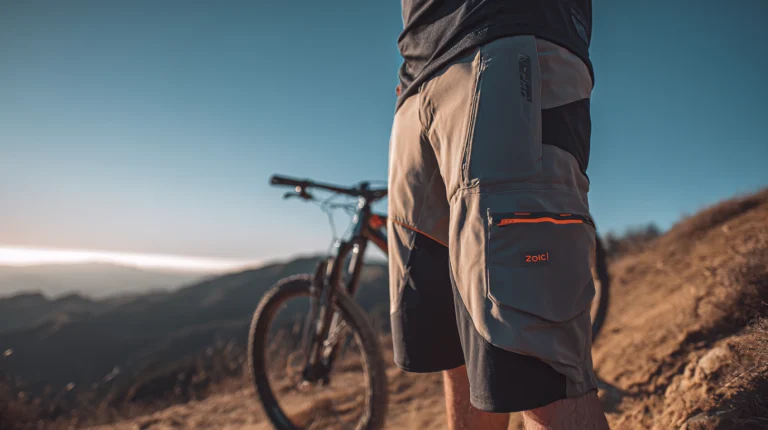
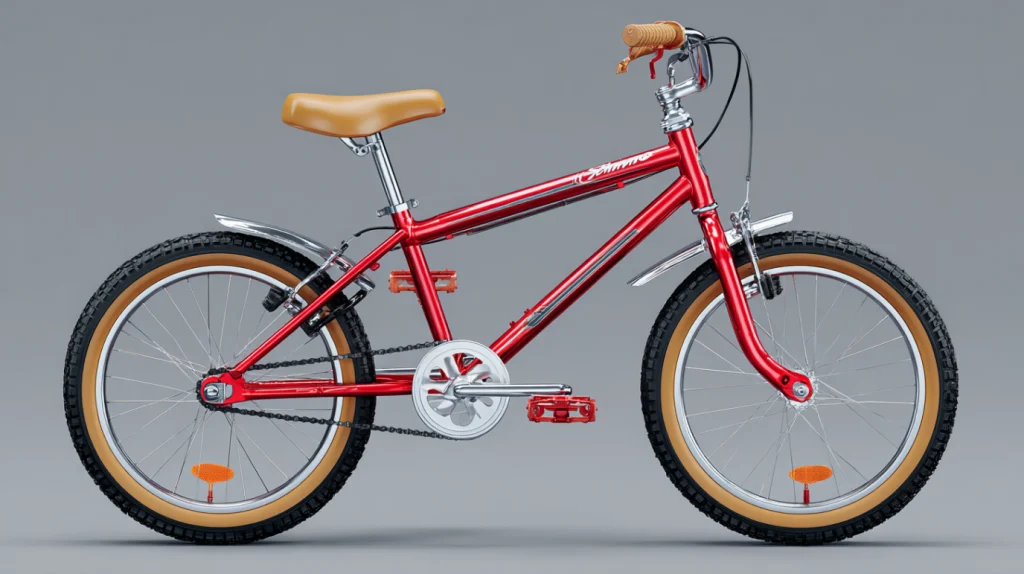


Schwinn Signature Boys’ Thrasher 20” Mountain Bike
- The Schwinn Boys’ Thrasher 20’’ Mountain Bike is designed for young riders looking to trade up to riding with gears and keeping up with adult riders. The aluminum frame features front suspension to smooth over uneven terrain, linear pull brakes for quick stops, and easy to use 7 speed twist shifters.
$369.99

Schwinn Aerostar 20-in. Children’s Bike, Ages 7-13 Years, Orange
- Trusted Quality: Trusted by parents, designed in Madison, Wisconsin. The Aerostar is a BMX-style kids bike for teaching your little one to ride.
- Perfect Fit: The Aerostar incorporates a low standover height to make getting on and off the bike easier, ensuring a more kid-friendly ride.
- Easy Braking: Stopping is simple with the coaster brake by pedaling backward, plus a handbrake for an easy transition to a regular bike.
- Adjustable Seat: Tool-free adjustable seat allows the bike to grow with your child, providing long-term usability.
- Extra Protection: Added protection with the chainguard and a cool BMX-style number plate that boys love.
- Quick Assembly: Assembles in minutes with the included tools and a simple instruction guide, so kids can start riding quickly.
$117.00
From Confusion to Confidence: Everything I Learned About Finding the Right Bike for Growing Riders
I still remember the exact moment I realized my daughter had outgrown her training wheels and her tiny 16-inch bike. She was pumping her legs furiously down our driveway, knees practically hitting the handlebars, looking like a circus performer on a miniature bicycle. That’s when I knew it was time to dive into the world of 20-inch bikes, and like many parents before me, I found myself completely overwhelmed by the options.
The Schwinn 20-inch bike kept appearing in my research, popping up in forum discussions, parent groups, and online reviews. But here’s the thing—knowing a brand name and actually understanding what makes a good bike are two entirely different challenges. I spent weeks researching, comparing, and yes, making a few mistakes along the way. What I learned during that journey completely transformed how I approach buying a bike for kids, and I want to share everything with you so you don’t have to stumble through the same confusion I did.
Understanding What Makes the Schwinn 20-Inch Bike Special
Before we dive into the specifics of different models and buying guides, let me tell you what I discovered about Schwinn as a brand. Founded in 1895, Schwinn has been building bikes for over a century, which means they’ve had plenty of time to figure out what works and what doesn’t. But legacy alone doesn’t make a great bike—it’s about how that experience translates into modern designs that meet today’s needs.
When I started my buying guide for Schwinn 20-inch bike research, I quickly realized that the 20-inch category isn’t just one type of bike. Schwinn produces several distinct models in this wheel size, each designed for different riding styles, skill levels, and purposes. This was my first major revelation: I couldn’t just ask “Is the Schwinn 20-inch bike good?”—I had to figure out which specific model matched what we needed.
The beauty of the 20-inch wheel size is that it hits a sweet spot for kids typically between 6 and 10 years old, though age is less important than actual height and inseam measurements. This size provides enough stability for confident riding while being nimble enough for kids to learn new skills and build genuine cycling competence.
Exploring the Best Schwinn 20-Inch Bike Models
Through my research and hands-on experience, I discovered that the best Schwinn 20-inch bike models fall into several distinct categories, each serving different needs and riding styles.
The Schwinn Koen caught my attention first. This model embodies classic styling with modern reliability, featuring a durable steel frame that can withstand the kind of treatment active kids dish out daily. What I loved about the Koen was its simplicity—single-speed design, coaster brakes, and a low standover height that made it easy for my daughter to mount and dismount confidently. The Koen comes in both boys’ and girls’ versions, though honestly, the main difference is cosmetic. I’ve seen plenty of girls rocking the “boys'” version and vice versa, because good bikes transcend marketing categories.
Then there’s the Schwinn Elm, which I consider the slightly more adventurous sibling of the Koen. The Elm features hand brakes instead of just coaster brakes, which was important for us because I wanted my daughter to develop the hand strength and coordination needed for larger bikes down the road. The Elm also sports a more contemporary design with vibrant color options that really appealed to my daughter’s sense of style.
For kids interested in tricks and BMX-style riding, the Schwinn Predator enters the conversation. This bike is built differently from the ground up, with a reinforced frame, pegs for grinding, and geometry designed for jumps and stunts rather than casual neighborhood cruising. When I was evaluating whether Schwinn 20-inch bikes are good for BMX tricks, the Predator consistently came up as a solid entry-level option. It’s not a competition-grade BMX bike, but for kids learning ollies, bunny hops, and basic tricks at the local skate park, it provides a sturdy platform without the premium price tag of specialized BMX brands.
The Schwinn SmartStart series deserves special mention because it incorporates thoughtful design elements specifically engineered for young riders. These bikes feature narrower pedal positions that match kids’ narrower hip widths, lighter frames that are easier to control, and grips sized appropriately for smaller hands. When I test-rode similar bikes with my daughter, the difference was immediately noticeable. She could reach everything comfortably and manipulate the bike with much more confidence than on adult-proportioned designs shrunk down.
Navigating the Cost: How Much Does a Schwinn 20-Inch Bike Actually Cost?
Let’s talk money, because that was definitely a factor in our decision-making process. When I started wondering how much does a Schwinn 20-inch bike cost, I expected a simple answer. Instead, I found a wide range depending on model, features, and where you purchase.
At the lower end, basic Schwinn 20-inch models like the Koen or Elm typically retail between 150 and 250 dollars. These bikes offer solid construction, proven designs, and everything a young rider needs to enjoy cycling without unnecessary bells and whistles. I found this price point incredibly reasonable given Schwinn’s reputation and the quality of components.
Mid-range Schwinn 20-inch bikes, which might include additional features like hand brakes, suspension forks, or multiple gears, generally fall between 250 and 400 dollars. These models provide more versatility and often last longer as kids grow and their riding abilities evolve.
Specialized models like the Predator for BMX riding can range from 200 to 350 dollars depending on specific features and where you buy them. While this might seem expensive for a bike your child might outgrow, I learned to think about cost per use rather than just the upfront price. If your child rides regularly, even a 300-dollar bike breaks down to just pennies per ride over a year.
Here’s a money-saving tip I discovered: prices fluctuate significantly based on season. I found the best deals in late fall and winter when bike shops are clearing inventory for next year’s models. One store near me had the previous year’s color schemes marked down by nearly 40 percent, and the only difference was the paint job. The bike itself was identical to the current model.
Is the Schwinn 20-Inch Bike Good for Kids? My Honest Assessment
This was the question that kept me up at night during my research phase: Is the Schwinn 20-inch bike good for kids? After months of real-world experience, I can confidently say yes, but with important qualifications.
Schwinn’s reputation in the bike industry is built on producing reliable, well-designed bikes at accessible price points. They’re not the lightest bikes available, and they don’t feature the most cutting-edge components, but they strike an excellent balance between quality and affordability that makes sense for growing children.
What I appreciate most about Schwinn’s approach to kids’ bikes is their focus on durability. Kids are notoriously hard on equipment—they crash, drop bikes, ride through puddles, leave them outside in the rain, and generally treat bikes like the adventure tools they are. Schwinn bikes are built to handle this treatment. The steel frames might be slightly heavier than aluminum alternatives, but they’re also more forgiving when bikes inevitably fall over or collide with obstacles.
The safety features on Schwinn 20-inch bikes gave me peace of mind. Reliable braking systems, whether coaster brakes for beginners or hand brakes for more advanced riders, work consistently. The bikes come with reflectors and often include chainguards to prevent clothing or shoelaces from getting caught—small details that matter enormously in real-world use.
However, I also learned that “good for kids” depends entirely on your specific child and intended use. For casual neighborhood riding, trips to the park, and building basic cycling skills, Schwinn 20-inch bikes excel. They’re absolutely suitable for beginners and provide a stable, predictable platform for learning. But if your child is a serious competitor in BMX racing or mountain biking, you might eventually want to invest in more specialized equipment.
Where Can I Buy a Schwinn 20-Inch Bike Online? Navigating Your Options
When I started figuring out where to buy a Schwinn 20-inch bike online, I discovered that shopping strategy matters almost as much as which model you choose. Different retailers offer different advantages, and understanding these can save you money and frustration.
Major online retailers like Amazon carry extensive Schwinn selections with the convenience of fast shipping and easy returns. I found their customer reviews particularly helpful because they came from real parents dealing with real kids, not just cycling enthusiasts. The reviews revealed common issues like assembly difficulties or which models ran small, information that proved invaluable.
Walmart’s online platform offers competitive pricing on Schwinn bikes, often with the option to pick up at local stores. This hybrid approach appealed to me because I could avoid shipping costs while still doing my research online. However, I noticed that availability varied significantly between stores, so it’s worth checking multiple locations if you’re going this route.
Target carries select Schwinn models online, and I found their website particularly user-friendly for comparing specifications across different bikes. Their seasonal sales can offer substantial discounts, especially during back-to-school periods when they’re trying to move inventory.
Dick’s Sporting Goods and other specialty sporting goods stores maintain robust online Schwinn selections. I appreciated their detailed product descriptions and the ability to check local inventory before ordering. Several times, I found bikes listed as out of stock online but available at nearby physical locations.
Direct purchases from Schwinn’s website were surprisingly competitive on price, especially during promotional periods. They also offered the most comprehensive information about specifications, geometry, and intended use cases for each model.
Here’s what I learned about online bike buying: pay close attention to assembly requirements and whether assembly is included. Some retailers offer fully assembled delivery or in-store assembly services, while others ship bikes in boxes requiring significant assembly. This brings me to an important topic that initially intimidated me but turned out to be manageable.
How to Assemble a Schwinn 20-Inch Bike: My Step-by-Step Experience
I’ll be honest—when that big box arrived at my door, I felt a flutter of panic. How to assemble a Schwinn 20-inch bike had seemed like a simple question during my research, but facing the actual task felt daunting. I’m not particularly mechanically inclined, and the instruction manual looked like it was written for someone who speaks fluent bicycle.
But here’s what I discovered: bike assembly is far more approachable than it initially appears, especially for Schwinn bikes, which arrive mostly pre-assembled. Let me walk you through what I experienced so you know exactly what to expect.
Most Schwinn 20-inch bikes arrive with the frame, drivetrain, and rear wheel already assembled. You’re primarily attaching the front wheel, handlebars, pedals, and seat, then making adjustments. The process typically takes between 30 minutes to an hour for a first-timer, less once you know what you’re doing.
I started by laying out all the parts and tools, checking everything against the parts list. This step saved me frustration later because I discovered one box was missing a crucial washer, which I could obtain from a local hardware store before getting too deep into assembly.
The front wheel installation was straightforward—it slides into the fork dropouts and secures with nuts or a quick-release mechanism depending on the model. The key is ensuring the wheel sits centered between the fork legs and spins freely without rubbing the brake pads.
Attaching the handlebars required more attention. The stem needed to be inserted into the fork steerer tube at the correct depth, tightened securely, and aligned with the front wheel. I learned the hard way that eyeballing alignment doesn’t work—you need to stand over the bike, look down, and ensure the handlebars point exactly where the wheel points. Misalignment makes steering feel weird and can be dangerous.
Pedal installation confused me initially because pedals have different threads—the right pedal tightens clockwise, but the left pedal tightens counterclockwise. The pedals are usually marked “L” and “R” to help, but I still managed to cross-thread one initially by forcing it the wrong direction. Once I understood the logic (the threads are designed so pedaling forward tightens them), it made perfect sense.
The seat installation was simple—insert the seat post into the frame, adjust to the appropriate height, and tighten. Getting the height right matters enormously for comfort and safety, which leads me to another important topic.
Throughout assembly, I made small adjustments and repeatedly tested everything, checking that nothing wobbled, rubbed, or felt loose. I also took the bike to a local bike shop for a safety check after assembly, which cost about twenty dollars and gave me peace of mind that everything was done correctly.
Adjusting the Seat and Handlebars: Getting the Perfect Fit
Learning how to adjust the seat and handlebars on a Schwinn 20-inch bike was crucial for my daughter’s comfort and safety. I initially set everything based on the manual’s recommendations, but watching her ride revealed that proper fit requires ongoing adjustment as kids grow and their riding style evolves.
For seat height, I learned to have my daughter sit on the bike with her heels on the pedals. At the bottom of the pedal stroke, her leg should be fully extended but not locked. When she moves her foot to the proper ball-of-foot position on the pedal, this creates a slight bend in the knee at the bottom of the stroke, which is biomechanically ideal. Too low, and she’s cramped and inefficient. Too high, and she rocks side to side and can’t control the bike properly.
Handlebar height and reach affect comfort and control significantly. For casual riding, handlebars positioned higher than the seat create an upright, comfortable position perfect for neighborhood cruising. For more aggressive riding or BMX-style tricks, lower handlebars relative to the seat provide better control and maneuverability. Most Schwinn 20-inch bikes allow some adjustment here through the stem height or by rotating the handlebars forward or backward in the clamp.
I marked the seat post with a small piece of tape at my daughter’s ideal height because we occasionally lent the bike to friends, and this made it easy to return to her preferred setting. As she grew, I moved the tape up periodically, creating a visual record of her growth that she found surprisingly motivating.
One crucial safety note I learned: never extend the seat post or stem beyond their minimum insertion marks. These marks exist because raising components beyond them compromises structural integrity and can lead to dangerous failures.
Understanding Specifications: What Really Matters
When I first started comparing specifications of the Schwinn 20-inch bike across different models, I felt overwhelmed by technical jargon and numbers that seemed meaningful but remained mysterious. Through research and experience, I learned which specs actually matter for real-world use.
The frame material significantly impacts weight, durability, and cost. Most Schwinn 20-inch bikes feature steel frames, which are heavier than aluminum but more durable and affordable. For kids’ bikes that endure frequent drops and crashes, steel’s resilience often outweighs the weight penalty. Some higher-end Schwinn models use aluminum frames, reducing weight but increasing cost. My daughter couldn’t really tell the difference in normal riding, but I appreciated the lighter bike when loading it into the car.
Brake type varies across Schwinn models. Coaster brakes (backpedal to stop) are intuitive for young riders transitioning from training wheels, requiring minimal hand strength and coordination. Hand brakes develop skills needed for larger bikes but require adequate hand size and strength. Some Schwinn models offer both, which I found ideal for gradual transition. My daughter started using the coaster brake exclusively, then gradually incorporated the hand brake as her confidence and strength increased.
Gear systems range from single-speed simplicity to multi-speed versatility. For younger riders still developing cycling skills, single-speed bikes eliminate the confusion and maintenance of derailleurs. Older kids comfortable with basic riding might appreciate gears for tackling varied terrain. I found that most kids under eight didn’t really need gears for typical neighborhood riding.
The weight limit for a Schwinn 20-inch bike typically falls between 150 and 180 pounds depending on the specific model. This generous limit means the bike can accommodate growing kids for several years and even handle most adults for short test rides or teaching sessions. I verified the specific limit for our model in the owner’s manual, as it varies between designs.
Wheel specifications include tire width and tread pattern. Wider tires provide more stability and comfort, especially on rough surfaces or grass. Knobby treads work better for trail riding, while smoother treads roll faster on pavement. Most Schwinn 20-inch bikes come with versatile tire combinations suitable for mixed-surface riding.
Schwinn 20-Inch Bike vs. 24-Inch Bike: Making the Right Size Choice
One question that plagued my decision-making was understanding the difference between a Schwinn 20-inch bike and a 24-inch bike. I worried about buying the wrong size and having my daughter struggle with an ill-fitting bike or outgrow it immediately.
The numbers refer to wheel diameter, and this seemingly small difference creates significantly different bikes. The 20-inch size typically suits riders between 42 and 52 inches tall (roughly 3’6″ to 4’4″), though these are general guidelines, not absolute rules. The 24-inch size accommodates taller kids and teens, generally those 4’8″ and above.
Beyond height compatibility, these sizes represent different stages in cycling development. The 20-inch bike feels more maneuverable and playful, easier for kids to control and handle. It’s light enough for them to pick up when it falls and manage independently. The 24-inch bike starts approaching adult bike proportions and handling characteristics, preparing riders for full-size bikes while still being appropriately scaled.
I made the mistake initially of thinking bigger is better, that buying a 24-inch bike would mean my daughter could use it longer. But watching her struggle to control the larger bike taught me that proper fit trumps longevity. She couldn’t flat-foot at stops, struggled to throw the bike into turns, and generally looked uncomfortable. When we switched to the properly sized 20-inch bike, her confidence soared. She could control the bike, which made riding fun rather than frustrating.
The inseam measurement proved more reliable than height for sizing. I had my daughter stand flat-footed and measured from the ground to her crotch. For a 20-inch bike, an inseam between 18 and 24 inches typically works well, allowing proper standover clearance and seat height adjustment. If her inseam exceeded 24 inches, the 24-inch bike made more sense.
Trail Riding Capabilities: Can You Take It Off-Road?
An unexpected question emerged as my daughter’s skills grew: Is the Schwinn 20-inch bike good for trail riding? We’d started visiting local parks with dirt paths and light trails, and I wondered whether her bike could handle more adventurous terrain.
The answer depends significantly on which Schwinn model you’re riding and what you mean by “trail riding.” For maintained dirt paths, gravel trails, and light off-road adventures, most Schwinn 20-inch bikes perform admirably. The knobby tires provide decent traction, the sturdy frames handle bumps and roots, and the bikes remain stable over variable terrain.
However, for more technical mountain biking with significant rocks, roots, drop-offs, and challenging features, most Schwinn 20-inch bikes show their limitations. They lack the suspension, aggressive geometry, and specialized components of true mountain bikes. The single-speed drivetrain struggles on steep climbs, and the general-purpose brakes don’t provide the stopping power needed for steep descents.
That said, I was pleasantly surprised by how capable our Schwinn proved on family trail rides. We tackled numerous park trails, dirt paths, and light single-track without issues. The bike’s durability meant I didn’t worry about damaging it on roots or rocks, and my daughter developed excellent bike handling skills navigating challenging terrain.
For kids seriously interested in mountain biking, consider whether a dedicated youth mountain bike makes sense. But for casual trail adventures mixed with neighborhood riding, the Schwinn 20-inch bike provides excellent versatility. We upgraded to slightly more aggressive tires, which improved trail performance noticeably without compromising pavement efficiency.
Training Wheels and Beginner Considerations
A question I encountered frequently when helping other parents was: Does the Schwinn 20-inch bike come with training wheels? This depends on the specific model, but most Schwinn 20-inch bikes designed for older kids don’t include training wheels because riders ready for 20-inch wheels have typically progressed beyond needing them.
However, some Schwinn 20-inch models marketed toward younger or less experienced riders do include training wheels or offer them as accessories. The SmartStart series, for instance, recognizes that some six or seven-year-olds might have the height for a 20-inch bike but still need training wheel support.
In my experience, if your child still needs training wheels, carefully evaluate whether a 20-inch bike is appropriate yet. Training wheels work less effectively on larger bikes because the wheel size creates a higher center of gravity and the bike becomes harder to balance once the training wheels are removed. Many kids transition more successfully by mastering balance on a smaller bike or balance bike before moving up to the 20-inch size.
That said, every child develops differently. If your child has the height for a 20-inch bike but lacks confidence, training wheels can provide a temporary bridge. Just be prepared to remove them relatively quickly—the goal is building confidence, not creating long-term dependence.
Regarding whether Schwinn 20-inch bikes are suitable for beginners, the answer is nuanced. For beginners who’ve outgrown smaller bikes and have basic balancing ability, absolutely yes. The stable geometry, reliable components, and forgiving handling make Schwinn 20-inch bikes excellent for developing riders. But for absolute beginners just learning to ride, starting with a smaller bike or balance bike often works better.
Warranty Coverage and Long-Term Support
An aspect I almost overlooked during my initial research was understanding whether the Schwinn 20-inch bike comes with a warranty. This might seem like a minor detail, but warranty coverage proved important when we experienced a manufacturing defect several months into ownership.
Schwinn typically offers a limited lifetime warranty on frames and forks for the original owner, with shorter coverage periods on components. The specific warranty terms vary between models and purchase locations, so I learned to verify the exact coverage before buying. Some retailers offer extended warranty options for additional protection.
Our warranty claim process was surprisingly straightforward. We discovered a crack in the frame near the bottom bracket after about six months of use. I contacted Schwinn customer service with photos and purchase information, and they approved a warranty replacement within a week. The process required patience—shipping the old frame back, waiting for the replacement, transferring components—but having warranty coverage meant we weren’t out hundreds of dollars for a new bike.
I learned to register the bike with Schwinn immediately after purchase, keeping the receipt and documentation in a safe place. This made the warranty claim process much smoother. Some retailers handle warranty claims directly, while others require you to work with Schwinn’s customer service, so understanding the process before problems arise saves stress.
Accessories and Customization Options
One unexpected joy of bike ownership was discovering what accessories are compatible with the Schwinn 20-inch bike. My daughter quickly wanted to personalize her ride, and I found a whole world of compatible accessories that enhanced both functionality and fun.
Basic safety accessories should be non-negotiable. We invested in a quality helmet first, ensuring it fit properly and met safety standards. Lights and reflectors increased visibility during evening rides, and a bell proved surprisingly useful for alerting pedestrians and other cyclists.
Practical accessories enhanced usability significantly. We added a water bottle cage to the frame, which kept drinks accessible during longer rides. A rear rack allowed us to attach a basket for carrying items to the park or friend’s houses. Fenders kept mud and water from splashing onto clothing during wet conditions.
Fun accessories let my daughter express her personality. Colorful grips, streamers for the handlebars, and decorative spoke beads transformed her bike into a unique expression of her style. These modifications didn’t affect performance but made the bike feel truly hers, which increased her enthusiasm for riding.
Maintenance accessories proved invaluable. A good bike lock protected our investment when we needed to leave the bike unattended. A basic repair kit with tire levers, a spare tube, and a pump prepared us for flat tires. A kickstand, though simple, prevented the bike from falling over and getting scratched.
Most accessories designed for 20-inch bikes fit Schwinn models without issues, but I learned to check compatibility before purchasing. Some accessories require specific mounting points or dimensions that vary between models.
Color Options and Aesthetic Choices
Never underestimate the importance of appearance when buying kids’ bikes. Whether the Schwinn 20-inch bike is available in different colors mattered enormously to my daughter and, by extension, to whether she’d actually ride it enthusiastically.
Schwinn offers their 20-inch models in various color schemes, from classic blues and reds to more contemporary options like mint green, purple, and multi-color patterns. Availability varies by model and retailer, and I found that popular colors sometimes sold out quickly, especially before holidays and birthdays.
My daughter gravitated toward the teal and coral color combination on one model, which initially wasn’t available at our preferred retailer. We waited three weeks for a restock rather than settling for a different color because I knew that having a bike she genuinely loved would encourage more riding. That patience paid off—she rides that bike constantly and takes pride in its appearance.
Some parents might think color doesn’t matter, that kids should just appreciate having a bike. But in my experience, kids who love how their bike looks ride more frequently and take better care of it. The emotional connection to a beautiful bike motivates maintenance, careful handling, and regular use.
I also considered resale value when thinking about colors. Neutral colors like black, blue, or red tend to have broader appeal if you plan to sell or pass down the bike eventually. But given how relatively affordable Schwinn bikes are and how much joy the “perfect” color brought my daughter, I decided current happiness mattered more than theoretical future resale.
Real-World Reviews: What Other Parents Are Saying
When researching reviews for the Schwinn 20-inch bike, I found that reading experiences from other parents provided invaluable real-world insights that technical specifications couldn’t capture. Let me share some patterns I noticed across hundreds of reviews and my own experiences.
Positive reviews consistently praised Schwinn’s durability. Parents reported bikes lasting through multiple children, surviving crashes and rough treatment, and requiring minimal maintenance. The value proposition came up repeatedly—reviewers felt they received excellent quality for reasonable prices. Many specifically mentioned that their Schwinn bikes outlasted more expensive competitors.
Assembly difficulty generated mixed reviews. Some parents found assembly straightforward, while others struggled, particularly with brake adjustments and handlebar alignment. I noticed that reviews improved significantly for people who watched assembly videos online rather than relying solely on printed instructions. The takeaway: supplemental video resources help tremendously.
Comfort and fit received generally positive feedback, with parents noting that their kids enjoyed riding and could control the bikes well. However, some reviews mentioned that certain models ran small or large relative to height recommendations, reinforcing the importance of verifying fit before purchasing.
Negative reviews helped me avoid potential problems. Some models had recurring issues with specific components like kickstands or chain guards. By reading these patterns, I could either choose different models or prepare to address known issues proactively. Several reviewers mentioned that out-of-box assembly required significant adjustment and tuning, which I verified and addressed before my daughter’s first ride.
The most valuable reviews came from parents who updated their feedback after several months or years of use, providing insight into long-term durability and performance. These revealed which components wore out first, how bikes held up to different riding styles, and whether kids continued enjoying their bikes over time.
Pros and Cons: My Honest Assessment
After extensive research and real-world experience, I want to share the pros and cons of the Schwinn 20-inch bike as I’ve encountered them. This balanced perspective will help you make an informed decision.
The advantages are significant and numerous. Schwinn’s reputation for reliability means these bikes consistently perform as expected without surprises or disappointments. The build quality delivers impressive durability—our bike has survived countless falls, crashes, and challenging conditions without structural issues. The price point remains accessible for most families without sacrificing quality, offering genuine value rather than just being cheap.
The variety of models means you can find a Schwinn 20-inch bike suited to your specific needs, whether that’s casual cruising, BMX tricks, or light trail riding. Parts and accessories are widely available, making maintenance and customization straightforward. The bikes retain decent resale value, and their popularity means you can often find replacement parts or used models easily.
However, Schwinn 20-inch bikes aren’t perfect, and understanding their limitations matters. The weight exceeds that of premium children’s bikes, which can affect handling for smaller or less strong kids. While durable, steel frames mean these bikes are heavier to carry and transport. Some components, while reliable, represent basic rather than premium quality—you won’t find high-end derailleurs or advanced braking systems.
The bikes don’t excel in any specific discipline. They’re good all-around bikes but not optimized for racing, competitive BMX, or serious mountain biking. If your child develops serious interest in a specific cycling discipline, you’ll eventually want more specialized equipment.
Assembly quality can vary depending on who builds the bike. Department store floor models sometimes show poor assembly that affects performance and safety. The need for periodic maintenance and adjustment is higher than with more expensive bikes featuring premium components.
For me, these cons represented acceptable trade-offs given the price and intended use. We needed a reliable, affordable bike for general riding, and Schwinn delivered exactly that. But if weight matters critically to you, or you need sport-specific performance, consider whether the trade-offs align with your priorities.
Comparing Schwinn to Other Brands
One question that consumed significant research time was how the Schwinn 20-inch bike compares to other brands. I looked at comparable models from companies like Huffy, Mongoose, RoyalBaby, and Guardian, trying to understand where Schwinn fit in the competitive landscape.
Against Huffy, Schwinn generally offers better build quality and component durability. Huffy bikes cost less, but I noticed more reviews mentioning broken parts, poor assembly, and shorter lifespans. The price difference was small enough that Schwinn’s superior reliability seemed worth the investment.
Mongoose competes directly with Schwinn in similar price ranges, and the comparison becomes more nuanced. Mongoose bikes often feature slightly more aggressive styling and components oriented toward action sports. For BMX-style riding, some Mongoose models matched or exceeded comparable Schwinn options. However, Schwinn’s broader model range and longer company history gave me more confidence in their engineering and quality control.
RoyalBaby bikes intrigued me with their unique features like built-in water bottles and distinctive styling. However, I found less information about long-term durability, and their somewhat unusual components made me worry about finding replacement parts years down the road. Schwinn’s conventional design meant standard parts would always be available.
Guardian bikes represent a premium option with innovative safety features like the SureStop braking system. They cost significantly more than Schwinn models—often double the price—but offer lighter weight, better components, and thoughtful engineering details. For our needs and budget, the premium didn’t justify the cost, but for families prioritizing weight savings and advanced safety features, Guardian bikes deserve consideration.
At the premium end, brands like Woom and Cleary produce exceptional children’s bikes with remarkable attention to detail, geometry optimized for kids, and impressively light weight. These bikes cost three to four times what Schwinn models cost, which placed them outside our budget. However, for serious young cyclists or families who can afford the investment, the performance difference is real and meaningful.
My conclusion was that Schwinn occupies a valuable middle ground—better quality and durability than budget brands, more affordable than premium options, with good performance for typical use cases. They won’t win races or impress serious cyclists, but they provide reliable, enjoyable transportation for regular kids doing regular riding.
Tips for Maintaining Your Schwinn 20-Inch Bike
One aspect I wish I’d understood earlier was how basic maintenance could extend bike life and improve performance. I learned these lessons gradually, but I want to share them so you can benefit from my experience.
Regular cleaning makes an enormous difference. After muddy or wet rides, I rinse the bike with water, avoiding direct spraying into bearings or other sensitive areas. A soft brush removes stubborn dirt, and occasionally I wipe down the frame with a damp cloth. This simple habit prevents rust, keeps the bike looking good, and helps me notice developing problems before they become serious.
Chain maintenance proved crucial for smooth, reliable operation. I learned to clean the chain periodically using a rag to wipe away dirt and old lubricant, then apply fresh bike-specific lubricant to the links. This simple task, taking just five minutes, dramatically improved shifting smoothness and reduced wear on drivetrain components.
Tire pressure checking became part of our weekly routine. Properly inflated tires roll easier, handle better, and resist punctures more effectively. The recommended pressure range appears on the tire sidewall, and I invested in a simple floor pump with a pressure gauge to maintain correct inflation.
Brake adjustment required more attention than I initially expected. Cable-actuated brakes stretch and loosen over time, reducing stopping power. I learned to periodically adjust brake cable tension and ensure pads contacted rims evenly and effectively. This wasn’t difficult once I understood the mechanism, and it proved crucial for safety.
Loose bolts caused several problems before I learned to check them regularly. Vibration from riding can loosen everything from handlebar stems to pedals. Every few weeks, I’d go through the bike with appropriate tools, checking and tightening any bolts that had worked loose.
I also established an annual tune-up schedule with our local bike shop. A professional mechanic would thoroughly inspect the bike, make necessary adjustments, and catch developing problems I might miss. This cost perhaps thirty to fifty dollars annually but prevented larger expenses and kept the bike running optimally.
My Final Recommendations for Buying Your Schwinn 20-Inch Bike
After this comprehensive journey through buying a guide for Schwinn 20-inch bike options, specifications, and considerations, I want to share my final recommendations based on everything I’ve learned.
First, prioritize fit over everything else. A properly sized bike that your child can control confidently matters infinitely more than features, color, or any other consideration. Measure your child’s height and inseam, compare these to manufacturer specifications, and when possible, have them test ride before purchasing.
Second, match the bike to actual use rather than aspirational use. I initially considered BMX-style bikes because I thought my daughter might want to learn tricks. In reality, she mostly rides around the neighborhood and to friends’ houses. The simpler, more comfortable cruiser-style bike we ultimately chose suited her actual riding perfectly.
Third, don’t obsess over weight if you’re buying in the Schwinn price range. Yes, lighter bikes handle better, but the weight difference between Schwinn models and premium brands comes with triple the price. For most kids doing typical riding, Schwinn’s weight is perfectly manageable.
Fourth, invest in quality accessories from the start. A proper helmet, reliable lock, and basic repair kit matter more than bike upgrades or premium models. These accessories enhance safety, protect your investment, and ensure you’re prepared for common issues.
Fifth, plan for assembly or factor in professional assembly costs. If you’re not mechanically inclined or don’t have appropriate tools, paying for professional assembly ensures safety and optimal performance. The cost is modest and provides peace of mind.
Sixth, buy from retailers with good return policies. Despite careful research, sometimes a bike doesn’t work out—it doesn’t fit quite right, your child doesn’t like it, or you discover unexpected issues. Flexible return policies provide valuable insurance against these situations.
Finally, remember that the best bike is the one your child will actually ride. Features, specifications, and brand reputation matter less than whether the bike inspires enthusiasm and gets used regularly. Sometimes that means prioritizing the color they love or the style that excites them over technical superiority.
Conclusion: The Journey Continues
Looking back on my journey from confused parent to confident bike buyer, I realize how much I learned not just about Schwinn bikes specifically, but about children’s bicycles generally, about what matters in cycling equipment, and about how to evaluate products for my child’s needs.
The Schwinn 20-inch bike proved to be exactly what we needed—reliable, affordable, versatile, and enjoyable. It’s not perfect, but perfection wasn’t the goal. We wanted a bike that would facilitate outdoor adventure, build physical skills, create independence, and generate joyful childhood memories. By those measures, our Schwinn has succeeded beyond my expectations.
My daughter has logged hundreds of miles on her Schwinn 20-inch bike, developing confidence, competence, and genuine passion for cycling. She’s explored our neighborhood, visited friends, discovered new parks, and learned lessons about responsibility, maintenance, and caring for valued possessions. The bike has been her ticket to independence and adventure, exactly what I’d hoped for.
As I watch her outgrow this bike and start eyeing larger models, I feel a mixture of nostalgia and excitement. The 20-inch Schwinn represents a particular moment in her childhood, a transition from little kid to more capable young person. I know we’ll likely pass this bike along to another child who’ll create their own adventures and memories with it, continuing the cycle of growth and discovery that makes childhood bicycles so special.
Whether you’re just starting your buying guide for Schwinn 20-inch bike research or you’re deep into comparisons and decision-making, I hope my experience provides helpful guidance. Trust your instincts, prioritize your child’s actual needs, don’t overthink the details, and most importantly, get out there and ride together. The best bike is the one creating adventures and building memories, and Schwinn has been building exactly those bikes for generations.